Hi, I'm Michał.I turn complex problems
into products that feel simple.
15 years designing products and building design teams.
Currently leading design for AI-powered B2B products people can trust.
Product strategyComplex systemsAI experiencesDesign leadership
Selected work
Building, validating, and activating advertising audiences at global scale.
Confidential product, visuals abstracted. Detailed walkthrough available in person.
- My role
- Design Lead for the entire Audience platform: hands-on owner of Discovery, Builder, Audience List and Summary; final design authority across all modules.
- Team
- Three product designers reporting to me (four at peak), owning Insights, Syndication, first-party data and an emerging audience module; plus PM, engineering and data stakeholders. In parallel: 14 designers as regional design manager.
- Scope
- Concept → launch → US rollout, delivered through a major organizational change.
Strategists built audiences by browsing raw taxonomies.
Thousands of attributes. No discovery layer. One audience at a time. Validation only at the very end, when it was most expensive to be wrong.
We didn't redesign screens. We redesigned how strategists find, build, and trust audiences.
An audience is more than a definition.
Designing the platform meant designing the object itself: four layers strategists need to see, question, and trust.
Nobody browses thousands of attributes. Strategists describe audiences in their own words, so the product should understand them.
Search had to earn trust before people relied on it. Keeping browse as a fallback was the price of a safe transition.
Search became the front door. Browse stayed as a fallback.
Validation at the end meant rework and low confidence in what got shipped.
Richer reports take longer to compute. We surfaced the few signals fast enough to keep up with building.
Validation moved from the end into the flow.
A side-panel assistant creates a second workflow. Embedding AI into actions people already take creates none.
Invisible AI is harder to discover. Research later confirmed awareness, not capability, was the barrier.
A hackathon prototype shipped as a product feature.
Awareness, not capability, was the real adoption barrier.
Contextual research with power users revealed three states for every AI feature, each needing a different design response.
Signals it worked.
Validation moved into the flow
Checking an audience stopped being a final checkpoint and became part of building it.
From US launch to global rollout
The redesign went live first in the platform's largest and most demanding market. After a successful US launch, it rolled out gradually to every market the platform serves.
The new workflow became the default
The product keeps evolving through ongoing user research, and the new way of building audiences is now simply how the team works.
The product shipped. The question changed: what does this look like when AI is the fabric, not a feature?
I'm exploring this in a working prototype: a non-linear workspace that adapts to expertise: guided flows for juniors, density for seniors, with provenance on every AI suggestion, so trust is designed in, not assumed.
Turning different telecom products into one coherent buying experience.
One of Poland's largest telecoms. Mobile, broadband, TV and converged packages, each with its own commercial rules, all sold through one model.
- My role
- I co-designed the core interaction model with my UX counterpart and led its UI direction as it expanded across Orange's product portfolio. Nothing reached development without my sign-off.
- Collaboration
- Product UX teams adapted individual offer logic, while UI designers on my team executed the interfaces. I maintained cross-offer consistency and final design quality.
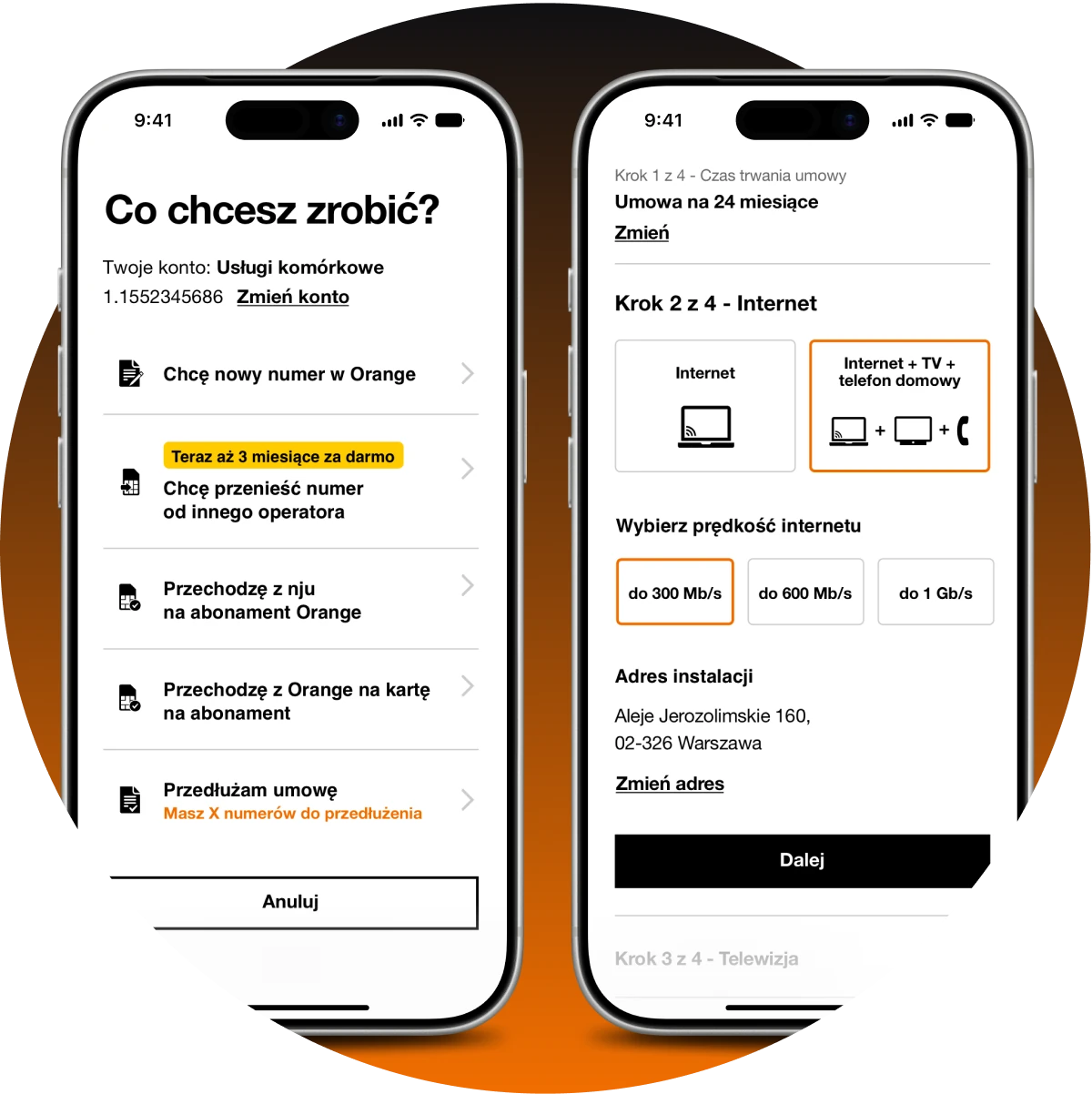
One brand. Multiple products. Completely different buying logic.
A mobile plan, a broadband connection, a TV package and a converged Love offer each carried different questions, dependencies, eligibility rules and pricing. Building a separate purchase page for every one meant inconsistency for customers and duplicated work across teams. And the audience was everyone. The same flow had to feel obvious to a nineteen-year-old and to their grandparents.
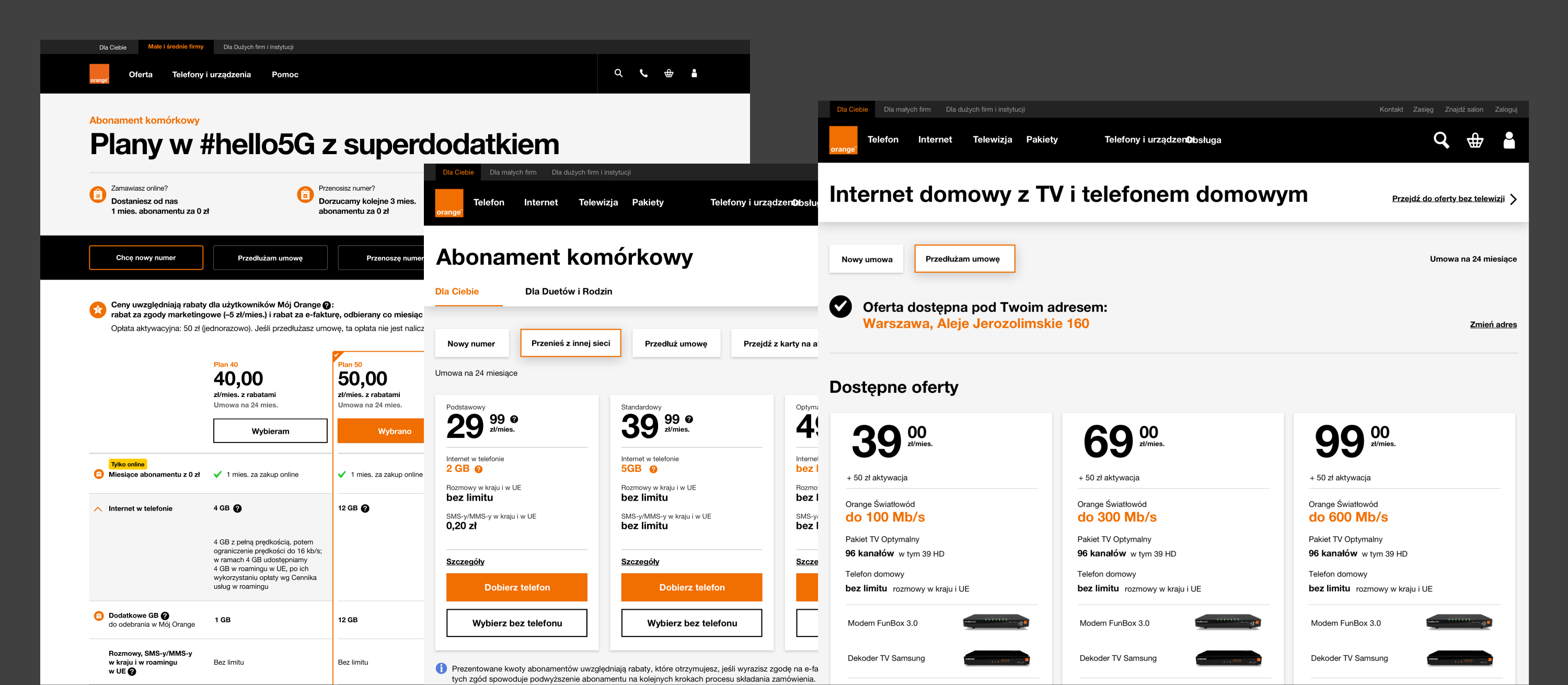
Guide the decision without taking comparison away.
We replaced offer landing pages with a progressive configurator: closer to configuring a MacBook than reading a telecom brochure. It revealed complexity one decision at a time, while keeping the offer, the price and the consequence of each choice visible. Customers could still compare. They just didn't have to hold the whole catalogue in their head.
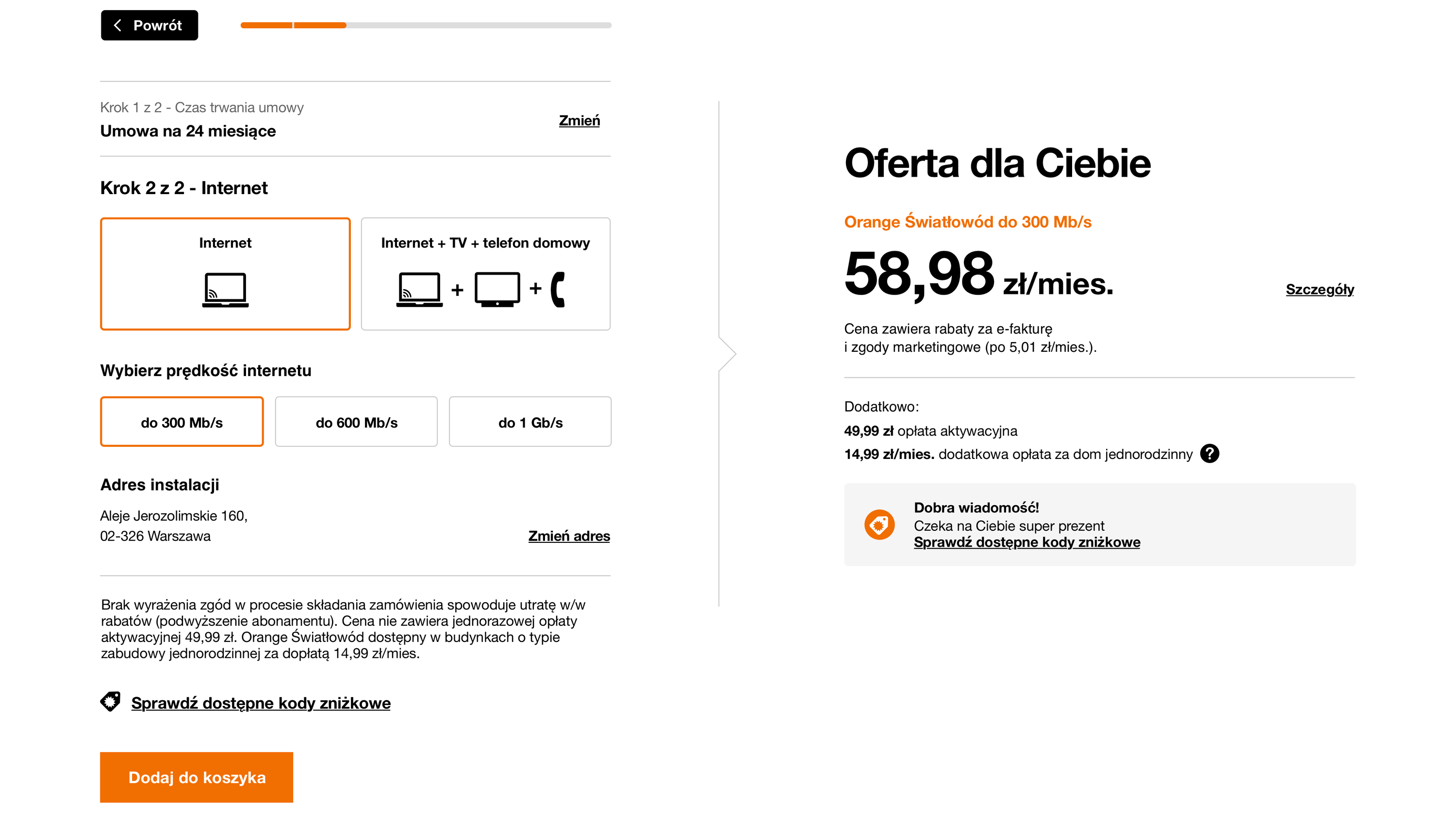
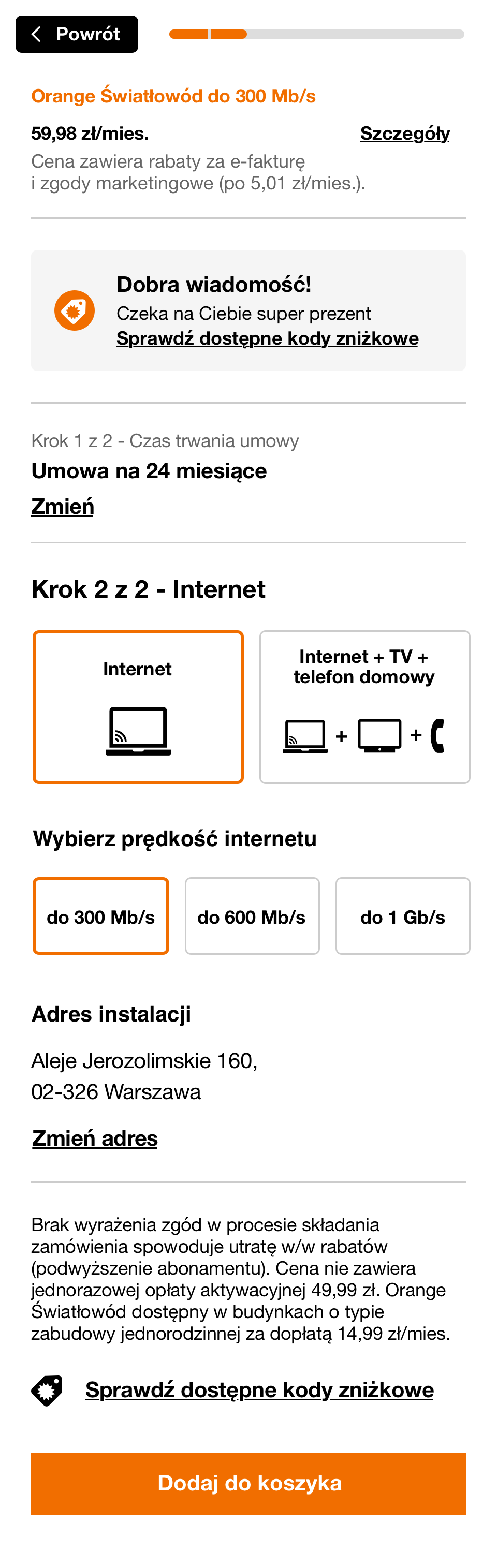
Three rules carried every offer.
They let one interaction model carry very different products without redesigning the journey each time.
Reveal complexity progressively.
Customers saw one meaningful decision at a time instead of a full telecom catalogue. The mechanics stayed simple even when the offer underneath wasn't.
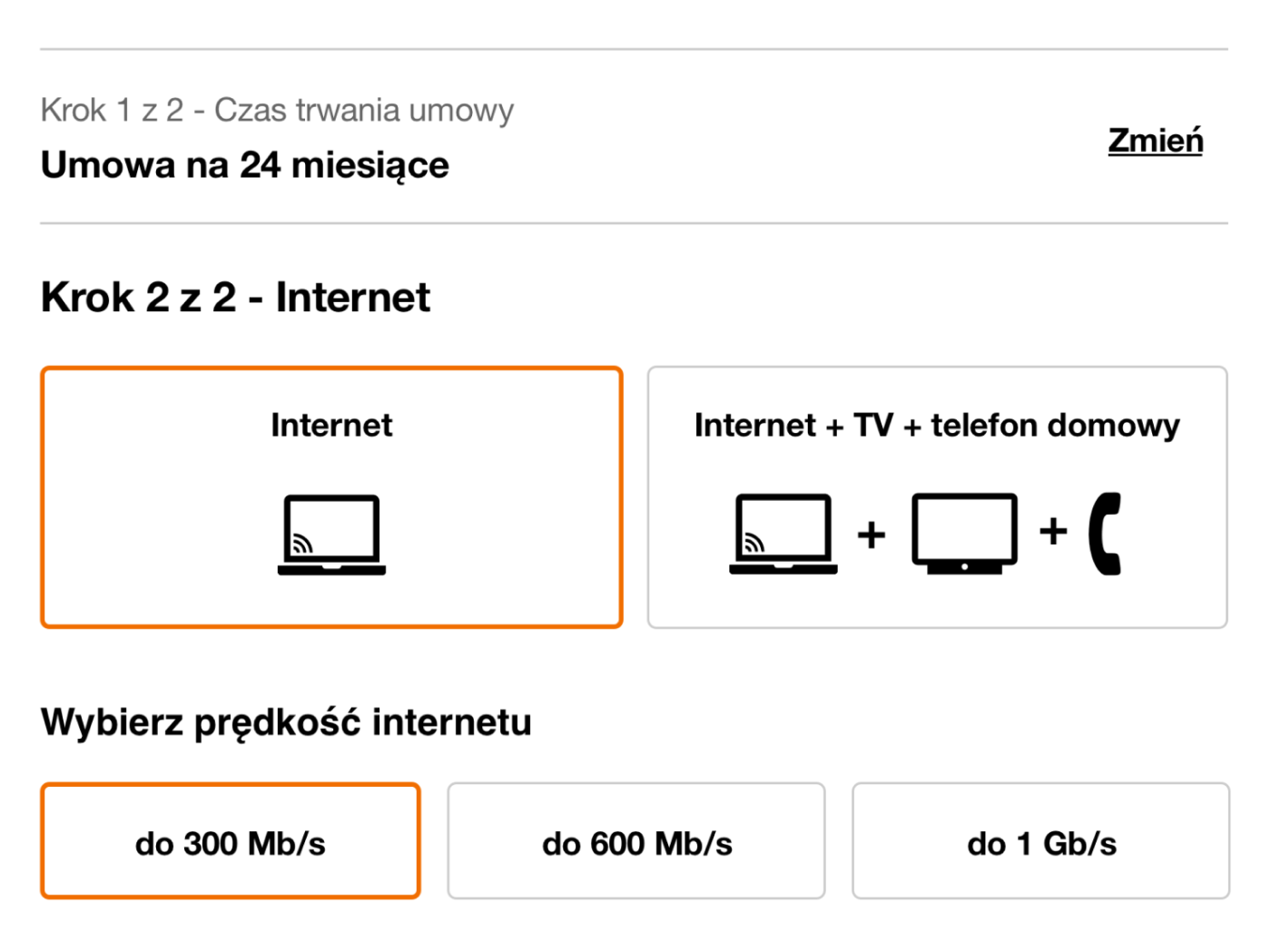
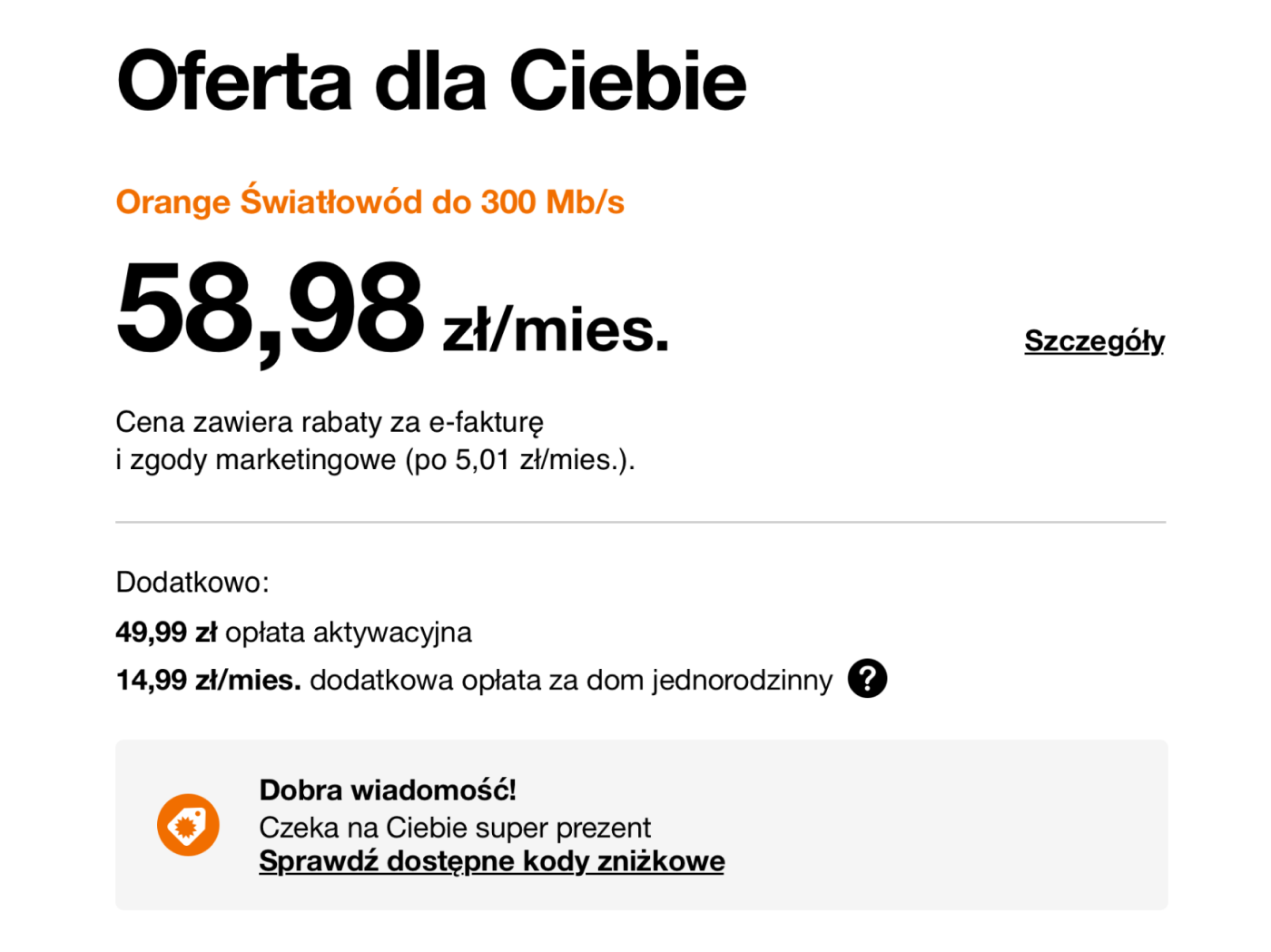
Keep the offer visible.
A persistent summary tied every choice to the product and price being built: current price, selected services, the effect of each add-on, and clear feedback after entering an address.
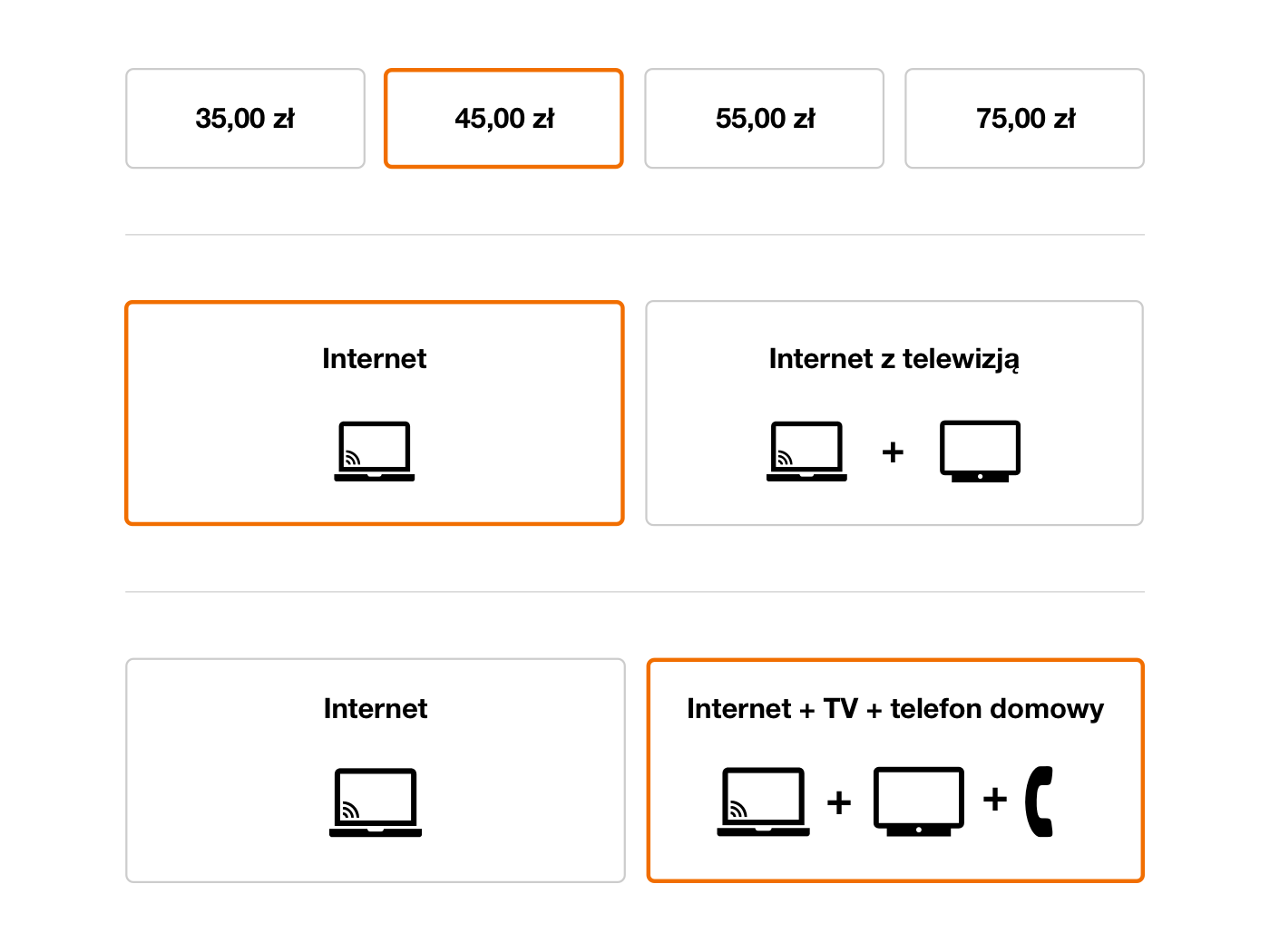
Separate the model from the product.
Teams could bring their own services, add-ons and eligibility rules without rebuilding the journey. The same skeleton of steps, options, detail layer, summary and navigation carried Love, fixed-line, mobile and business.
The model became shared product infrastructure.
Once the core experience held, each offer was built inside it rather than beside it. My role shifted from designing the first model to directing its UI evolution and protecting one interaction language across all of it.
The interaction model held up.
The model was validated and refined through multiple rounds of user research as offers were built inside it. Research consistently suggested the core flow was understandable and easy to follow. Recurring friction clustered around product-specific terminology, mandatory services, discount logic and promotional content.
It also had to stay understandable while absorbing telecom regulation, consumer-protection rulings, the GDPR rollout and WCAG accessibility standards. Compliance kept arriving as new constraints on live products, and the model had to take it without breaking.
The model could organise complexity.
It couldn't make business complexity disappear.
Adopted across offers. Refined by research. Kept on the homepage.
The model expanded across five offer families: mobile, broadband, TV, converged and business.
Product teams could introduce their own offer logic without rebuilding the complete buying journey.
Teams kept evolving their offers inside the model, and the configurator held a prominent entry point on Orange's homepage, the most contested surface in the company.
On the most contested surface,
longevity is performance.
Beyond the configurator: leadership at Orange.
-
Team and craft
Led ~10 UI designers in a multidisciplinary UX org. Zero voluntary attrition across my years leading it.
-
Four homepage redesigns
Co-led every iteration of orange.pl's most contested surface. The last one outlasted every previous version, well after I left.
-
Sketch → Figma and design system
Led the org's transition and built Orange's first global-ready design system in Figma.
-
From order-taker to global partner
Our team earned a standing seat in Orange's global design discussions. The global team asked us to help shape their shared resources.
Elsewhere at Orange: in-store sales systems, a smart-city IoT dashboard, the TV interface, and art direction for commercial shoots.
How I work
-
Start with the problem
A finished screen and a working experience are different things. I optimize for the second.
-
Prove it with evidence
"I think it's good" isn't the bar. "It solved the problem" is.
-
Design behavior, not interfaces
People take shortcuts, skip steps, and distrust what they don't understand. Design for that.
-
AI is fabric, not a feature
Woven into actions people already take. Invisible when it works.
-
Ship to learn
Four months to launch beats twelve months to perfect.
-
Build teams, not heroes
The best work I've shipped was shipped by people I grew.
Product design is my focus.
Craft is my foundation.
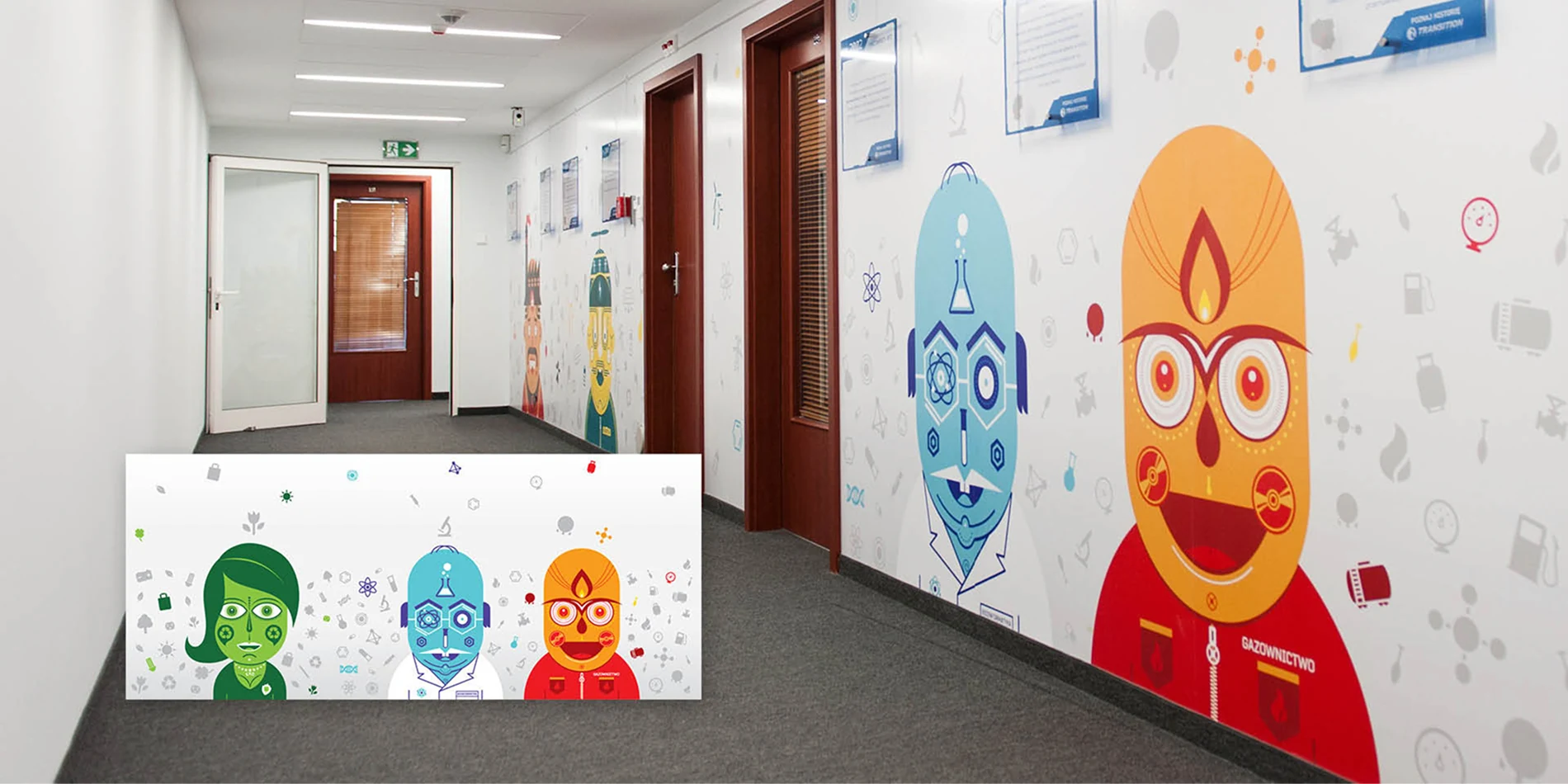
Today I lead teams and build products, but I got here as a multidisciplinary designer: identity, print, illustration, 3D, murals, animation, commercial video. That range is why I can look at a product whole, and build it that way.


The team is the product, too.
- 2022 →Kinesso · IPGAssociate Product Design Director, reporting to the Product Design Director · team distributed across Poland, the Netherlands, Colombia and the US
- 2017–2022Orange PolskaLead UI Designer · UI direction across the product portfolio
- 2010–2017Transition TechnologiesHead of Design · built the department from scratch
One story instead of a claim: when the Audience effort was stumbling, product was ready to move on without design at all. I stepped in, took over the design lead, and rebuilt the partnership decision by decision. A year later, no major decision shipped without design at the table.
The structure, collaboration, and communication
between him and the product manager had evolved
so much that it genuinely amazed me.
ON HOW DESIGNER–PM COLLABORATION TRANSFORMED WITHIN A YEAR
If my work, or the way I think, resonates,
I'd love to talk.
A role, a project, or just a conversation about design. I'm happy to connect.
